Is the Starmer ministry headed in the right direction?
With Labour’s sweeping win in 2024, hopes for change amongst Britons rose sharply. Yet by the time of Keir Starmer’s first party conference as Prime Minister, his approval ratings had never been lower.
To assess whether Starmer is heading in the right direction from an economic perspective, success must be defined not merely as long-term sustainability, but the capacity to deliver improvements to living standards within a single term.
Labour governs under binding economic constraints: high debt-servicing costs, fragile market confidence, and productivity stagnation. These factors severely limit scope for improvement. The result is an economic strategy that struggles to generate electorally perceptible gains.
Any incoming government inherits market expectations alongside necessary public spending. By the time Labour entered office, those expectations were considerably harder to meet: debt interest alone was absorbing close to £100 billion annually, exceeding spending on many public services. If borrowing costs increase, Starmer’s fiscal manoeuvring will become even more sensitive.
The Liz Truss mini-budget in 2022 proved that the bond markets can punish a government. Within days, borrowing costs increased rapidly, the sterling fell rapidly against the dollar, and the Bank of England was forced to intervene to stabilise pension funds. The episode demonstrated how fiscal indiscipline carries immediate costs, capable of forcing major policy reversals.
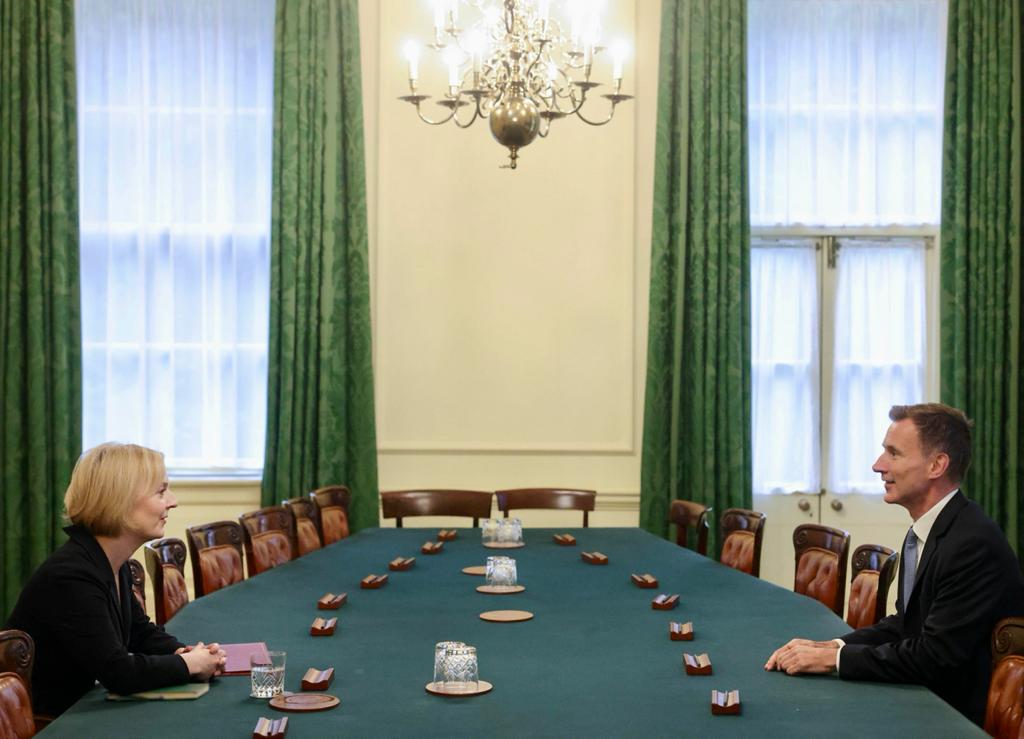
Labour took this lesson on board. Under Chancellor Rachel Reeves, Labour's fiscal policy seeks to satisfy tight fiscal thresholds aiming to minimise public debt, on which she stakes much of her political legitimacy on. These are not arbitrary but choices made by the government.
The effects are visible: spending commitments have been narrowed or abandoned, tax rises justified despite manifesto pledges, and policy framed around restraint rather than growth. The result is a Chancellor prone to raising tax rates, and unwilling to take risks.
Growth is the only escape from the financial issues plaguing the government, yet it is precisely what the UK struggles to generate. This is not a failure unique to the Starmer government. British productivity has been stagnant for more than a decade, reflecting serial mismanagement and weaknesses by previous administrations, and the shocks from leaving the European Union.
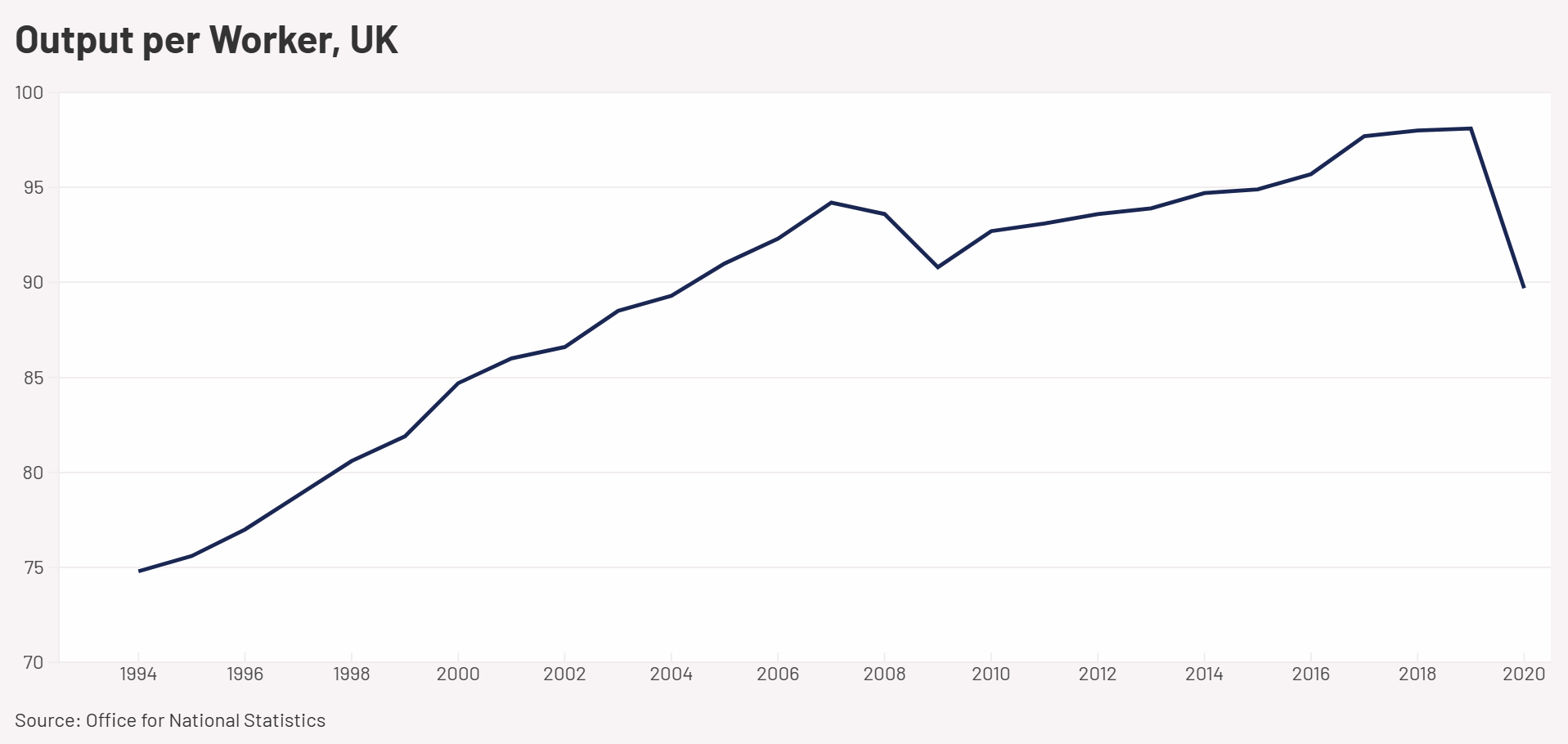
Output per hour has barely recovered since its trend before the 2008 financial crisis. The reforms most likely to raise productivity also operate on timescales that would outlast the time this government has left, unfortunately for Starmer.
Policies like planning reforms and skills investments won’t show profits quickly. Building homes has many hurdles that, to their credit, the government has been addressing. Long overdue infrastructure projects often balloon in costs before ground is broken.
As a result, these are politically difficult sells for a party facing Reform this May in the local elections, in which Labour is set to suffer heavy losses to Reform UK.
These tensions for Keir Starmer are further strained by regional inequalities. The economic strength of London and the south creates disproportionate gains that masked weak productivity elsewhere, leaving the UK reliant on the services exports that define London's economy. Business investment remained low outside London, while growth increasingly depended on rising property values.
When economic growth stalled after the 2007 crisis, these deprived areas were hit much harder. After the crash, unemployment tended to remain longer the further you were from London, and risk premiums remained stubbornly high as capital flowed south. The government confronts the skewed political economy which has stumped many governments, and it is a very expensive problem to fix.
The prime minister also has a further problem: Prolonged financial stagnation removes voter trust. When wages flatline and public services falter, voters stop believing centrist politics can deliver improvement at all. This opens up the path to parties seeking to disrupt the status quo – opening the door to less mainstream parties such as Reform UK and the Green Party. Reform has been leading in the polls for much of Starmer's government as concerns over immigration and culture clash with financial difficultues and the sense of mainstream parties not delivering on their promises.
It doesn’t seem to matter for many of Reforms supporters that the party’s financial policies don’t bear the weight of detailed economic scrutiny. For example, Reform's promises of large tax cuts with little reference to the national debt later had to be scaled back after . The party functions as a vehicle for registering dissatisfaction with an economy that offers diminishing prospects for advancement. Where the governing message emphasises constraint and endurance, an outsider party promising what neither Labour nor the Conservatives could achieve resonaates better with voters. Populism thrives not on optimism, but on the belief that there remains little to lose.
Overall, Starmer’s predicament is not primarily personal, but as a result of his unfortunate circumstances. It reflects a political environment that punishes constraint and rewards disruption, leaving governments to absorb blame for problems beyond their powers. In such a system, competence may steady institutions yet still fail to generate any meaningful support.
Starmer may govern in good faith and still lose ground to those offering radical solutions. Labour’s problem, then, is not largely that it has chosen wrongly, but that the era offers few choices that satisfy: only trade-offs between stability without progress and volatility without resolution.