
Labour's approach to immigration could spell electoral disaster
Immigration has been the hottest policy issue of the Labour government’s tenure so far, with ‘borders’ and ‘boats’ frequenting lips across the political spectrum. With Reform UK and the Greens surging in the polls, where exactly have Starmer & Co. gone wrong - and where should they go next?

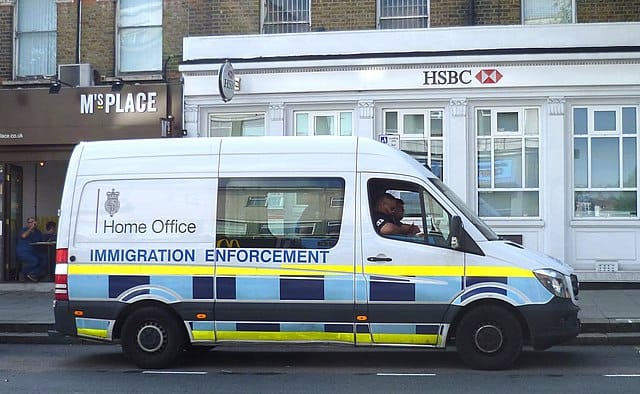
Treading the line between controlling immigration to stave off Reform and staying true to Labour’s historical commitment to inclusion and multiculturalism is no easy task for Keir Starmer. In this article, we examine the successes and failures of Labour’s immigration policy, before establishing which strategy would best help them reignite public support and hold on to power come the next election.
Controlling immigration
Labour made clear its rejection of the controversial Rwanda asylum scheme endorsed by the previous government, which planned to relocate asylum seekers and undocumented migrants to Rwanda for processing. Starmer called the policy “dead and buried” at the beginning of his premiership.
However, Labour's manifesto still promised to reduce the number of small boats crossing the Channel by creating a new ‘Border Security Command.’ This was established using the funding intended for the Rwanda scheme, which Starmer claimed would only deport “less than 1% of small boat arrivals.”
The Home Office claimed this new task force would “deepen ties between international and cross-government partners to disrupt the activity of people-smuggling gangs and ensure those profiting from it face justice.”
In February 2025, the Home Office published images and footage of the Command raiding establishments and deporting undocumented migrants. The passing of the Border Security, Asylum and Immigration Act in December 2025 expanded the Command’s powers of search and seizure, and a TikTok account named Secure Borders UK ran by the Home Office began widely sharing their deportation efforts.
@securebordersuk Restoring order and control to UK borders. #Immigration #UKImmigration #Politics #UKPolitics #UKNews
♬ original sound - Secure Borders UK
However, in just over a year since Labour’s return to power, over 13,000 more small boats crossed the channel, raising questions as to the efficacy of their supposed deterrents against undocumented migration.
The government did succeed in its pledge to bring down net migration. According to research from The Migration Observatory, net migration fell to around 204,000 between July 2024 and June 2025. However, much of this resulted from the fallout of the previous government's visa restrictions, and a wave of international student departures.
Reducing the issue of work visas was another tactic to force a decline in net migration, enforced through raising the skills requirement of a Skilled Worker visa to degree-level, closing new applications for overseas care workers, and investing in UK training through the Post-16 Education and Skills White Paper.
Additionally, the government’s reintroduction of HE maintenance grants draws its funding from a levy on international student tuition fees, which will likely reduce student visa applications to the UK as universities and colleges are pushed to raise fees for overseas students.
Despite fulfilling this pledge, a backlog of asylum appeals in UK courts has continued to grow since Labour entered office, and around 36,000 asylum seekers were accommodated in hotels at the end of September last year. This keeps already vulnerable asylum seekers in uncertainty as they remain unable to work, while support for Nigel Farage’s Reform UK surges as demonstrations outside hotels crop up around the country.
Parties, polls and appeasement
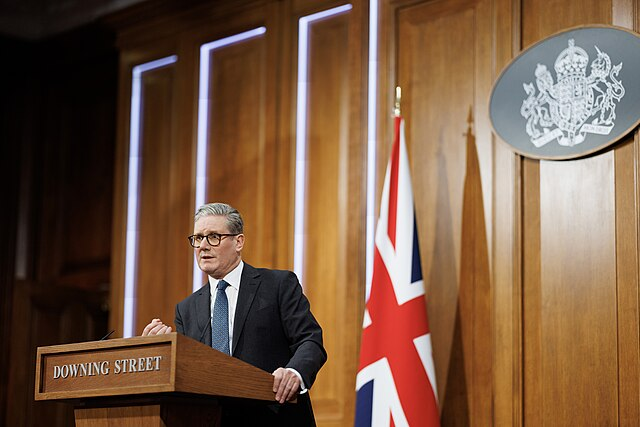
The government is increasingly faced with a choice: clamp down hard on immigration to attract floating voters tempted by Reform, or bring the traditional Labour left back on side – who are increasingly disillusioned by what is perceived as the government touting anti-migrant rhetoric to appease Reform.
In a speech announcing the tightening of immigration controls in May 2025, Starmer’s description of a Britain on track to become an “island of strangers” triggered heavy backlash. Despite the Prime Minister admitting he “deeply regrets” the phrasing, figures on Labour’s left including John McDonnell MP drew parallels with Enoch Powell’s infamous “Rivers of Blood” speech, which is often considered a racist scapegoating of immigrants.
This rhetoric was a likely driver in a surge of support for the Green Party, aided by a charismatic leadership campaign by Zack Polanski, with the Greens having more than doubled their 2022 membership. Now the third-largest party by membership, and with 38% of 18 to 24-year-olds polling for the Greens, a continuation of tough immigration policy and divisive rhetoric may shave even more off the left-hand side of Labour’s voting bloc.
Home Secretary Shabana Mahmood recently announced the government’s intention to deport the families, including children, of asylum seekers whose applications were rejected – if they refuse funding the government will provide for travel back to their home country. Benefits and social housing eligibility will also end for any migrants not yet British citizens.
Deepening Labour's alienation of left-wing voters is the Secure Borders UK TikTok account mentioned earlier, launched on 13 January. The footage shows immigration enforcement raiding houses and arresting those thought to be in the country illegally. The charity Freedom from Torture characterised the account as "dehumanising", while the PM's spokesperson defended it, claiming it will show "people-smugglers" that they will "face detention and deportation."
The left is disillusioned not only by the introduction of policies that could separate families, but also by a perceived attempt to legitimise anti-migrant policies by having the Home Secretary, herself a daughter of immigrants, as the advocate.
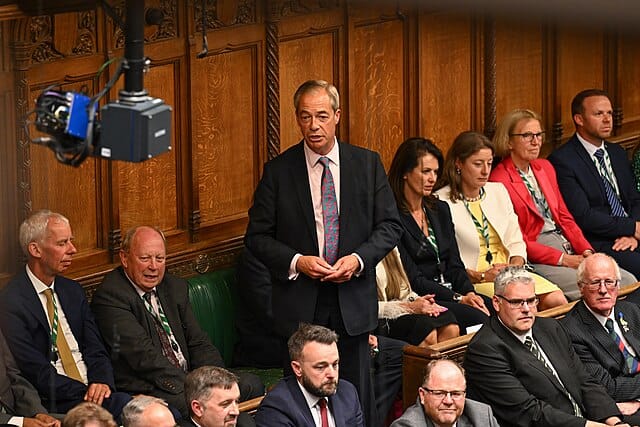
Criticism from the left, however, has in no way drowned out attacks from the right. Reform’s leadership have consistently branded the government’s immigration policy as cautious and ineffective; chairman Zia Yusuf promised the deportation of 500,000-600,000 undocumented migrants over a 5-year period should Reform gain power.
Yusuf also accused the government on social media of expecting the British public to “pay hundreds of billions for foreign nationals to live off the state forever” – a claim that will only galvanised Reform voters by convincing them that Labour is doing them a direct injustice.
The PM has labelled Reform’s immigration plans “racist” and “immoral”, showing that Labour is still a way off endorsing policy that would fit within a Farage manifesto. However, we know that language and legislation don’t always align.
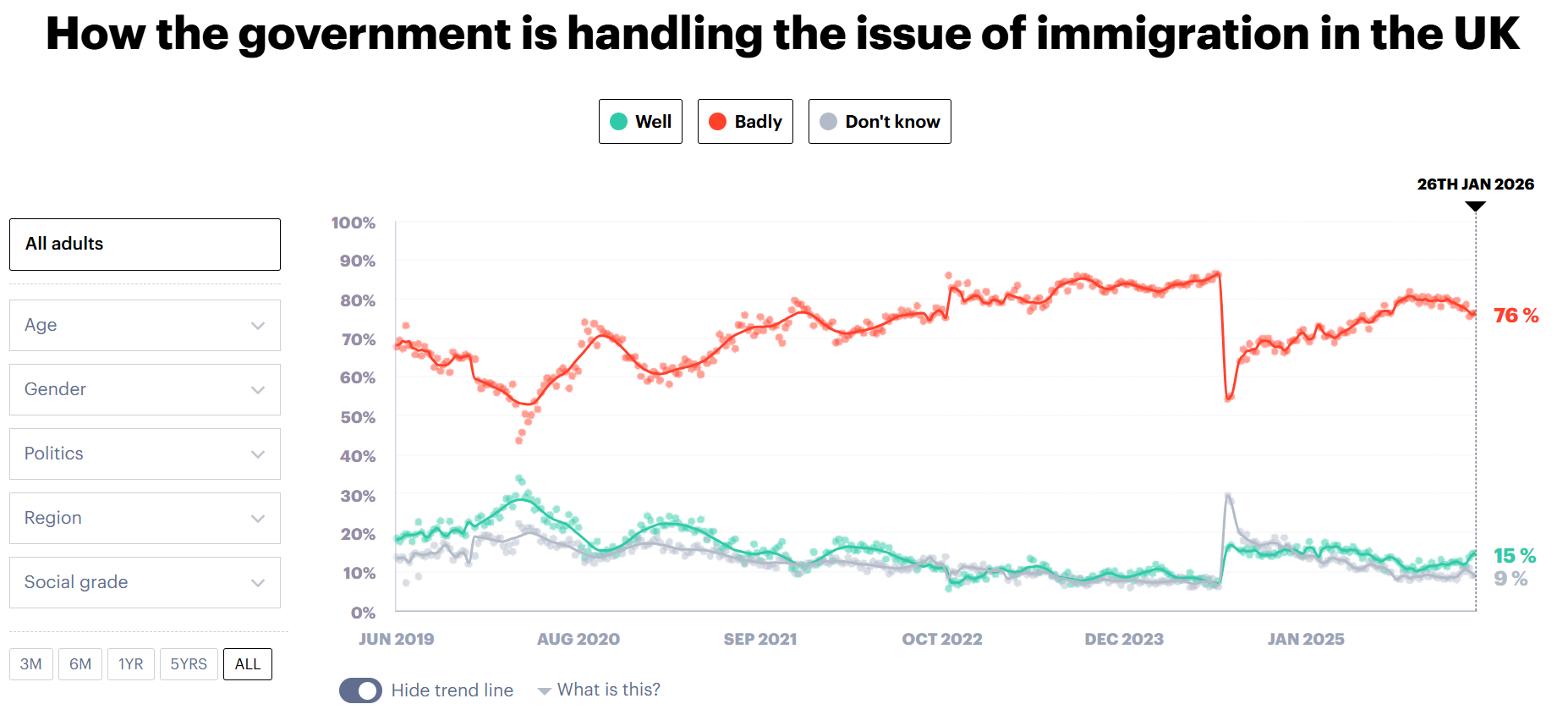
As of 26 January 2026, YouGov show that 76% of adults thought the Starmer government was handling immigration poorly. Clearly, considerable change is needed one way or the other if Labour intend to retain their majority when we next go to the polls.
Where to now?
When you’re dealing with the top issue for 37% of voters, taking a decisive stance is vital. Instead, the government has fashioned a confusing patchwork of policy that talks left and walks right, and vice versa the next day.
With polls projecting Reform to gain swathe of seats, and them already having taken control of councils across the country, trying to win back the socially conservative voter appears a lost cause for Labour.
This suggests an urgency to tone down rhetoric surrounding migrants, rethink some of Labour's tougher policies, and attempt to win back the left of the party if the government wants to stand firm against Reform at the polling booth.
Even if left-leaning voters are long gone to the Greens, the Liberal Democrats, or the floundering “Your Party”, finding common ground on the left will increase the possibility of Labour forming a coalition. This could soften the blow if they lose their current majority, potentially uniting the fragmented left-of-centre against Reform and the (likely much smaller) Conservative Party.
Wherever Labour heads next on immigration, mending ties with the left may be their only hope come the next general election.
Questions or comments? email us at polisbristol@gmail.com and let us know.