Has U.S. foreign policy become more performative?
As the U.S. confronts challenges to its hegemonic image, its foreign policy increasingly functions as a performance, focused on reaffirming its identity both domestically and internationally. In this process of projecting a powerful, assertive national image through discourse and symbolism, the U.S. simultaneously manages international reactions while hiding its decline behind a vast curtain. It mirrors how aging empires are often loudest, before they fall.
Performing Identity in International Relations (IR)
The critical approach to performativity and its relationship to the state's identity in International Relations (IR) often stems from Butler's theory of the performativity of gender and reiteration[1], which has been extended to national identity and sovereignty. Importantly, scholars such as Campbell argue that nations do not have a fixed identity; rather, they are continuously constructed through the representational practices of states [2]. Additionally, a nation's foreign policy is a performative practice through which its identity is reproduced and linked to threats from external factors. Therefore, national identity and even sovereignty are not inherent or fixed but must, in fact, be continuously performed and redefined in order to match the environmental/political context it faces[3]. These performances are thus highly dependent on relevant symbols and discourse. Other well-known theories, similar to performativity, include those related to security. The concept of security from the Copenhagen School holds that security threats are not necessarily objective but are labelled as security issues by political actors through “speech acts” or discourse[4].
These views have also been criticized. Laffey emphasizes that one should not fall into the discourse-only trap but should analyse global society as a combination of multiple logics, such as in the capitalist world system[5]. Meanwhile, Lefebvre argues that discourse has diminished the role of space, and power endures because it is spatialized[6].
Despite these criticisms, this article argues that the performativity approach to foreign policy is necessary for understanding current U.S. foreign policy decisions. As Ashley argues, the U.S. is also not a fixed entity, but a subject of world politics that has to be continuously produced through repeated performances of power, especially through language and practices of foreign policy[7]. The case of the U.S. foreign policy represents the process by which the nation is reshaping its identity. This process takes place as America fades its old identity of a hegemonic power, supplemented by the Trump administration's masterful use of discourse and symbolism.
Lights, Camera, Action
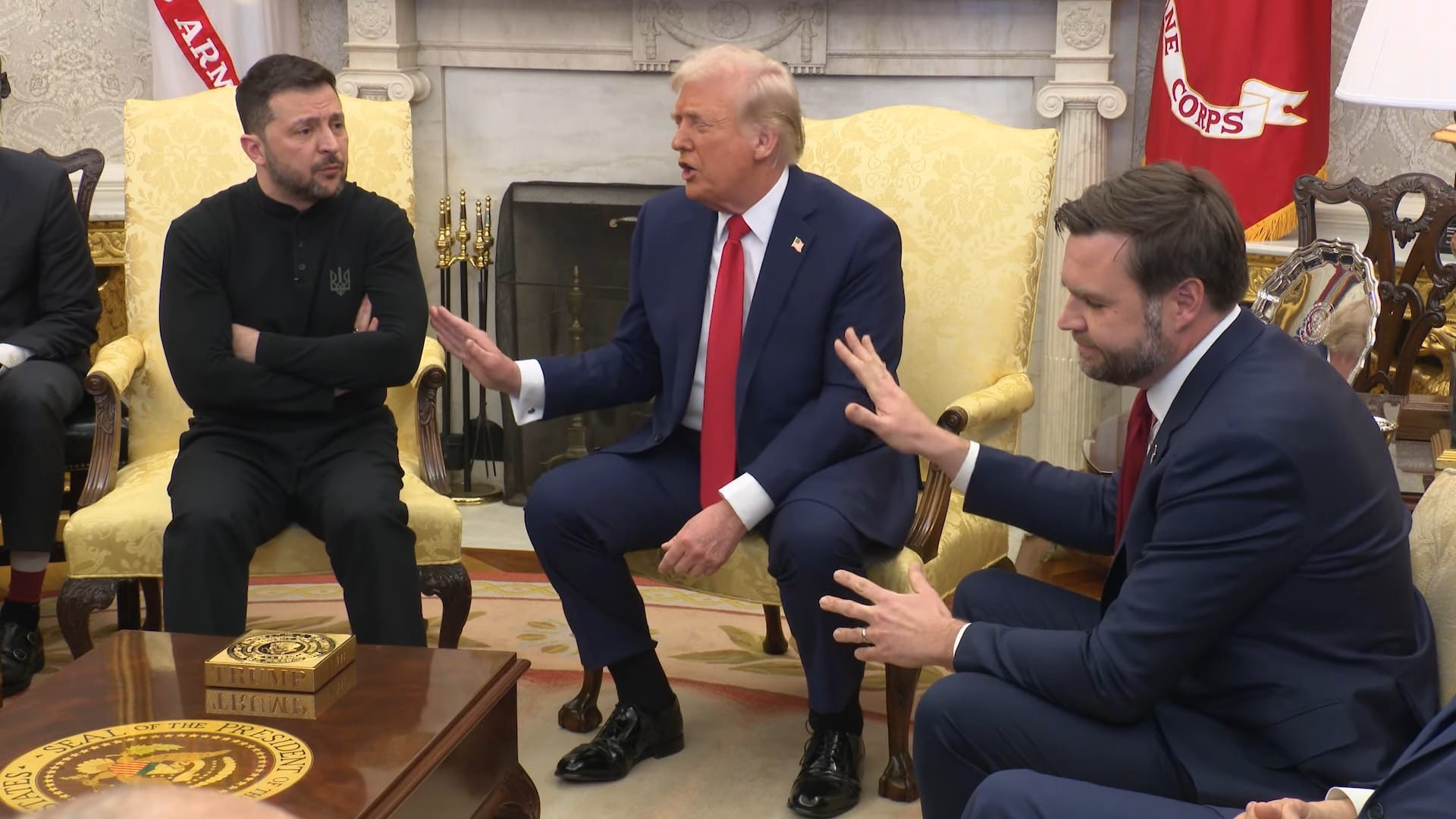
Under the Trump Administration, U.S. foreign policy has been elevated to a new level with the art of using symbolism and discourse to exert power to form an assertive, unpredictable identity. The one reason for this amplification may be that the Trump administration was truly masterful communicators, knowing how to harness the power of the free media space. A prime example is the negotiations between the Trump administration and the Ukrainian President Volodymyr Zelenskyy at the White House in February 2025.[8] The negotiations took place publicly with a large number of journalists present at the White House, observing Trump sitting next to Zelenskyy to discuss a mineral aid deal for the war and to humiliate the Ukrainian President. Vice President JD Vance criticized Zelenskyy for his disrespectful behaviour in front of the camera.[9] It conveyed a powerful statement, not to Zelenskyy, but to the Ukrainian people, to Russia, and to the rest of the world. This performance of the U.S. clearly conveys the message of strength and power, proving that only the U.S itself can determine Ukraine's survival and demands its obedience.
Recent American foreign policy has served as a performance of strength, also targeting multiple audiences. It's a complex interplay of political actors, from nations and parties to individuals. We can also take the reasons behind Trump's decision to capture former Venezuelan President Nicolás Maduro in January 2026[10]. The question is, why did the U.S. choose this particular time, and why did it have to carry out such large-scale military actions just to capture Nicolás Maduro? Discussions surrounding this topic are diverse but mainly revolve around oil extraction and drug enforcement[11]. Yet, the timing of the attack and the meticulous legal preparation by the Trump administration demonstrate that these political choices were carefully considered and weighed, targeting a diverse audience rather than just resources and blocking drug trafficking.
It was not a purely foreign policy decision, but a deeply symbolic event. U.S. foreign policy choice regarding Venezuela also serves Trump ahead of the mid-term congressional elections in October, and a message to China and other Latin American nations. For the American citizens, the impulsive rhetoric and large-scale attacks, “flexing muscles” with strikes at sea just to seize small drug boats from Venezuela[12], the Trump administration needed a highly symbolic performance to speed up policy processes passed before uncontrollable developments after the mid-term elections. For other Latin American countries, the 'Donroe' Doctrine must be mentioned. Even the word "doctrine" itself seems to reinforce a performance of power and self-legacy for Trump. It's an updated version of the Monroe Doctrine and signals to Latin America watchers the imminent future of America's hemispheric power[13]. Meanwhile, for Venezuela’s long-term partners, Russia and China, it was a warning that these countries must be wary and comprehend America's capabilities and the region in which it influences[14].
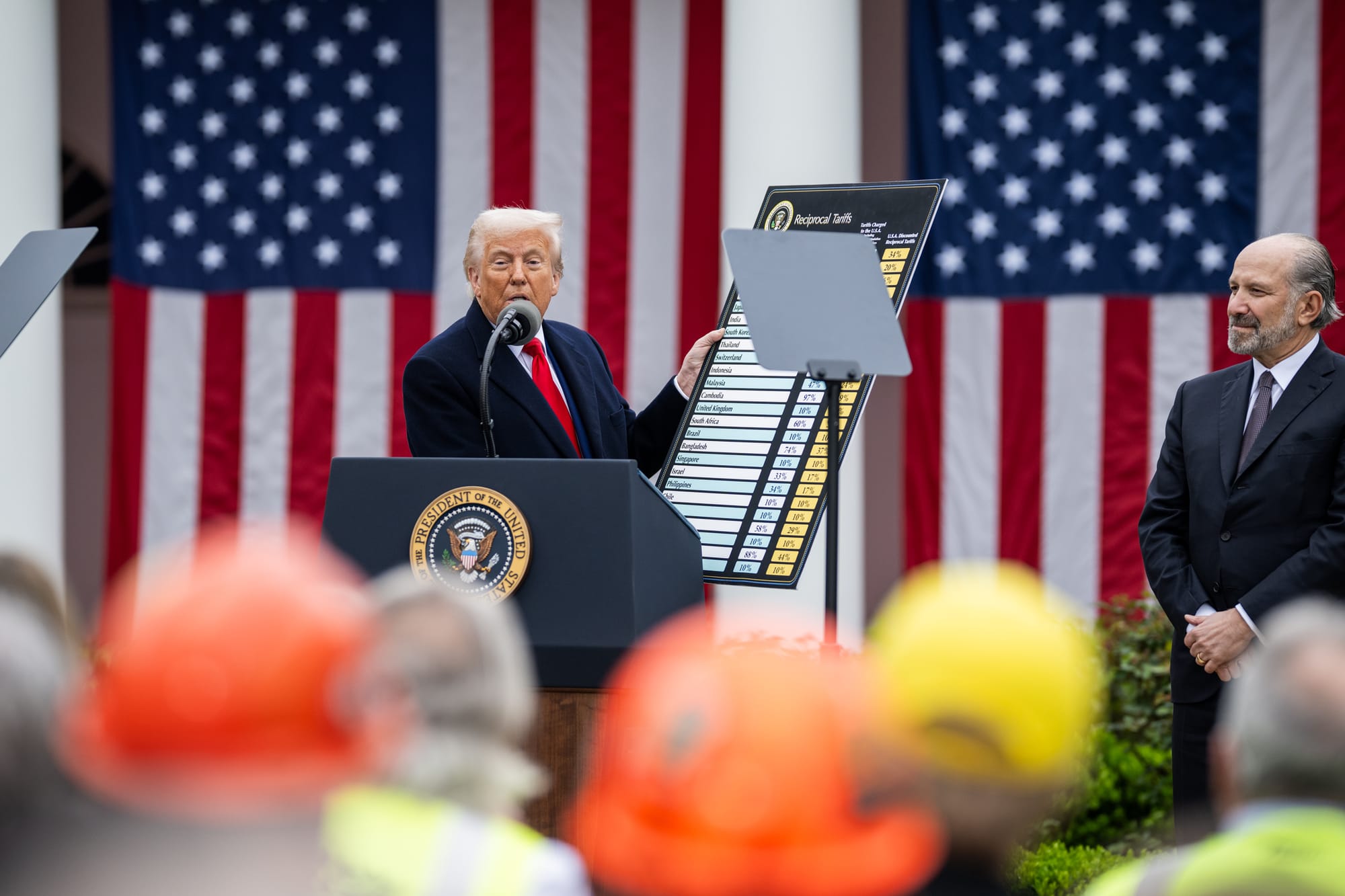
It can be seen that a distinctive feature of current US foreign policy is its maximum utilization of media power and symbolic values to distort the reactions of other international audiences and seek more power advantage. For example, the Trump administration defends reciprocal tariffs as an "economic weapon," but in reality, it was merely a pretext for other nations to seek negotiations and concessions from the U.S[15]. This art of negotiation, imbued with the style of a “seasoned dealer”, begins with information distortion. But do these certainly assertive foreign policies always reflect the current strength of the U.S.? In using foreign policy as a tool to reshape its tough, masculine, superpower identity, the U.S. has not always received the desired response.
Performance as Denial of Decline
The viewer’s perception does not always align with the performers’ intentions, as US policy decisions can also portray the image of a weakening middle-aged empire, making it become more vocal and aggressively forced. Instead of showing strength, it also shows weakness. In recent years, the U.S. has faced a series of realizations of falling behind China. It is no longer surprising to realize that China dominates the supply chain of rare earth production, which accounts for 70% of global rare earth ore mining output and 90% of the processing of rare earth[16], or that the global shipbuilding industry is dominated by this country as well[17]. And the U.S. is weaker than ever, forced to feign strength through symbolic violent actions and rhetoric to regain the negotiation advantage and reclaim its hegemonic self-image.
Returning to the case of Venezuela, the arrest of Nicolas Maduro shows a state resembling a short-term defensive reflex of an empire losing control of its surroundings. When resources are no longer sufficient to maintain order, there is a tendency to rely more on shocking, immediate and symbolic actions. When economic and military capabilities no longer match America's global ambitions, its foreign policy is forced to shift to a defensive, short-term and risky approach. History shows that empires rarely retreat quietly. Periods of relative decline are frequently marked by dramatic and highly visible assertions of power. The Suez Crisis of 1956 similarly marked a decisive moment in the decline of the British Empire, exposing the fact that the United Kingdom was now a second-tier power dependent on the U.S[18]. If the U.S. is entering a period of relative decline, that process is unlikely to be quiet. Additionally, when a major power acts increasingly arbitrarily, other actors in the international system may follow suit, and an order based on unpredictability and coercion will gradually emerge from precedents such as the events in Venezuela, and the most concerning future being the division of spheres of influence among great powers.
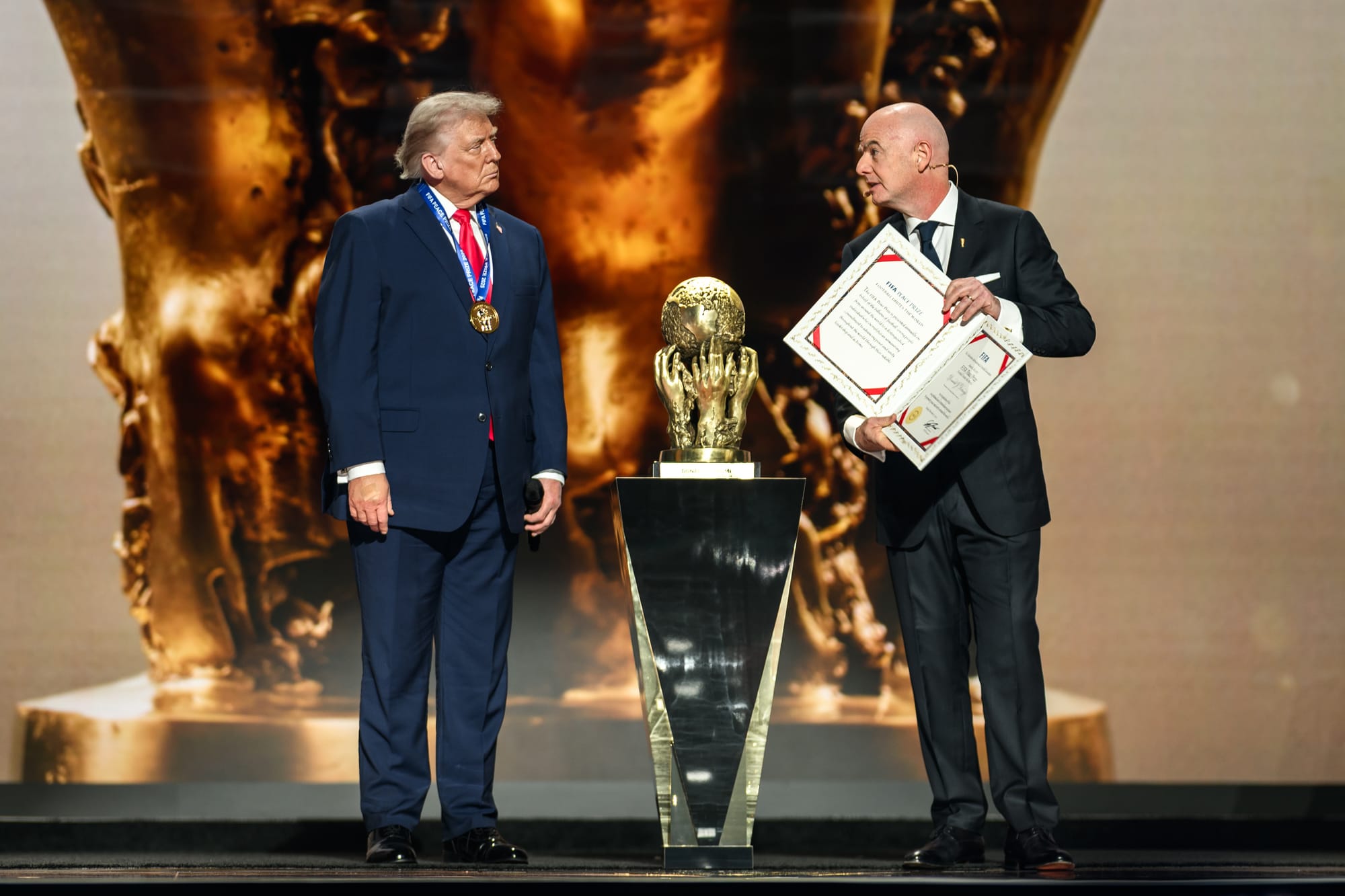
However, the reactions of the global audience can be diverse and also unpredictable. The response that the U.S. expects, which is submission, has in fact largely been achieved. The FIFA Peace Prize, gifts and visits from many looking to gain favour, and effusive praise both domestically and internationally has saturated Trump's tenure so far, including a controversial $400m private jet from Qatar. Such praise is clearly quite performative. The potential for a critical minerals agreement between the States, EU, UK, Japan, Australia, and New Zealand in January 2026 may be promising for the U.S[19]. But let's not forget the significantly increasing frequency of high-level meetings between the EU and UK governments and China. From late 2025 to early 2026, Beijing has already hosted numerous Western politicians, including Emmanuel Macron of France, Mark Micheál Martin of Ireland, Petteri Orpo of Finland, and Keir Starmer of the UK. Friederich Merz of Germany is expected to arrive in late February 2026[20].
Francis Fukuyama's perspective in "Don't Back Down, Europe" offers a radical view of what unfolds around the international stage, of the performers, and how viewers can choose their reactions[21]. Fukuyama emphasizes that strategies such as offering Trump "concessions, flattery, personal gifts, and other forms of tribute" will be ineffective[22]. These strategies demonstrate the anxiety and confusion of nations in the face of Trump's unpredictable and aggressive behaviour. But perhaps the fundamental way to counter bullying is not to react. China's approach when the U.S. imposed tariffs in March 2025 was to be prepared for the 125% tariff increase on US goods and "ignore" the reciprocal tariffs or this "meaningless number game"[23]. As a result, the two sides have arrived at more mutually beneficial negotiations. Of course, this might only apply to China as a mutual competitor in every aspect. But this shows that refusing to perform remains an option.
The debate about whether US foreign policy under Trump is rational versus irrational will likely continue. However, viewing it from a performance-focused perspective offers a more multifaceted and layered approach when analysing U.S. foreign policy – a way in which the U.S. is gradually building and reshaping its identity, allowing it to maintain its dominant position in the global system amidst multifaceted decline. Understanding the U.S. foreign policy now is no longer as direct as it once was. It involves calculations behind the scenes, waiting for interaction and perceiving from other actors to achieve its true objectives. The real question might no longer be whether foreign policy is performative, but whether global audiences still recognise the underlying weakness and when they choose to turn a blind eye.
[1] Judith Butler, ‘Performative Acts and Gender Constitution: An Essay in Phenomenology and Feminist Theory’, Theatre Journal 40, no. 4 (1988): 519–31, https://doi.org/10.2307/3207893.
[2] David Campbell, Writing Security: United States Foreign Policy and the Politics of Identity., 1 online resource (306 pages) (University of Minnesota Press, 1998), https://public.ebookcentral.proquest.com/choice/publicfullrecord.aspx?p=310792.
[3] Campbell, Writing Security.
[4] Ole Wæver, ‘Aberystwyth, Paris, Copenhagen: New “Schools” in Security Theory and Their Origins between Core and Periphery’, 2004.
[5] Mark Laffey, ‘Locating Identity: Performativity, Foreign Policy and State Action’, Review of International Studies 26, no. 3 (2000): 429–44, https://doi.org/10.1017/S0260210500004290.
[6] Gerald Moore, State, Space, World: Selected Essays, NED-New edition (University of Minnesota Press, 2009), https://www.jstor.org/stable/10.5749/j.ctttsrv7.
[7] Richard K. Ashley, ‘The Poverty of Neorealism’, International Organization 38, no. 2 (1984): 225–86.
[8] ‘President Trump Hosts President of Ukraine Volodymyr Zelenskyy’, The White House, n.d., accessed 8 February 2026, https://www.whitehouse.gov/gallery/president-trump-hosts-president-of-ukraine-volodymyr-zelenskyy/.
[9] Andrey Kurkov, ‘A Humiliation at the White House and What Does It Tell Us? Trump Would Make a Colony of My Country’, Opinion, The Guardian, 28 February 2025, https://www.theguardian.com/commentisfree/2025/feb/28/ukraine-us-minerals-deal.
[10] ‘Trump Announces U.S. Military’s Capture of Maduro’, U.S. Department of War, accessed 8 February 2026, https://www.war.gov/News/News-Stories/Article/Article/4370431/trump-announces-us-militarys-capture-of-maduro/.
[11] ‘Making Sense of the US Military Operation in Venezuela’, Brookings, n.d., accessed 8 February 2026, https://www.brookings.edu/articles/making-sense-of-the-us-military-operation-in-venezuela/.
[12] Robert Tait, ‘Killing of Survivors Sparks Outrage – but Entire US “Drug Boat” War Is Legally Shaky’, US News, The Guardian, 4 December 2025, https://www.theguardian.com/us-news/2025/dec/04/venezuela-boat-strikes-legality-hegseth.
[13] New York Post Cover for January 8, 2025 | New York Post, 8 January 2025, https://nypost.com/cover/january-8-2025/.
[14] Peter Walker and Peter Walker Senior political correspondent, ‘Venezuela Attack Could Embolden China and Russia, Says Emily Thornberry’, Politics, The Guardian, 5 January 2026, https://www.theguardian.com/politics/2026/jan/05/venezuela-attack-embolden-china-russia-uk-labour-emily-thornberry.
[15] Nicholas Mulder, ‘The Paradox of Trump’s Economic Weapon’, Foreign Affairs, 6 March 2025, https://www.foreignaffairs.com/united-states/paradox-trumps-economic-weapon.
[16] ‘China’s Rare Earths Dominance and Policy Responses’, Oxford Institute for Energy Studies, n.d., accessed 8 February 2026, https://www.oxfordenergy.org/publications/chinas-rare-earths-dominance-and-policy-responses/.
[17] Matthew P. Funaiole et al., Ship Wars: Confronting China’s Dual-Use Shipbuilding Empire, 11 March 2025, https://www.csis.org/analysis/ship-wars-confronting-chinas-dual-use-shipbuilding-empire.
[18] G. C. Peden, ‘Suez and Britain’s Decline as a World Power’, The Historical Journal 55, no. 4 (2012): 1073–96.
[19] Lisa O’Carroll, ‘US, UK, EU, Australia and More to Meet to Discuss Critical Minerals Alliance’, Business, The Guardian, 1 February 2026, https://www.theguardian.com/business/2026/feb/01/us-uk-eu-australia-critical-minerals-rare-earths-g7-minimum-price.
[20] Lim Teck Ghee, ‘Behind Western Leaders China Reset – OpEd’, sect. 1, Eurasia Review, 2 February 2026, https://www.eurasiareview.com/02022026-behind-western-leaders-china-reset-oped/.
[21] Francis Fukuyama, ‘Don’t Back Down, Europe’, 13 January 2025, https://www.persuasion.community/p/dont-back-down-europe.
[22] Fukuyama, ‘Don’t Back Down, Europe’.
[23] Global Times, US’ Tariff Hikes Expose ‘Utter Irrationality’ - Global Times, n.d., accessed 8 February 2026, https://www.globaltimes.cn/page/202504/1332273.shtml.