The Worsening Student Loan Crisis: Declining Trust Politically and Economically
The system has lost both economic credibility and political legitimacy embodying inequality in British society once again.

The current student loan model presents a paradox for graduates: it is technically a loan yet behaves more like to a tax. With the current cost-of-living crisis, a limited entry-level graduate job market, and soaring inflation rates, it is unsurprising to see graduates carrying debts averaging £53,000 (Bolton, 2025, p.4).
Although the loan system was introduced as a progressive and accessible model for students entering higher education, the current socio-economic climate and changes to the agreement by governments have created a contentious hybridisation of loan and graduate tax. In the last few weeks, the student loans issue has reached new heights of crisis, dominating domestic journalism and leading to a new UK Parliament (2026) inquiry examining whether “the goalposts have been moved in a way which is unfair to graduates?”.
Within this context, I aim to explain the student loan system and how it has evolved, why a crisis has emerged from this evolution in the modern day, and crucially propose a solution that would satisfy all actors involved.
The student loan system, introduced by the Labour Government in 1998 under the original repayment Plan One, has evolved over the decades from its original conceptualisation. The Dearing Report (National Committee of Inquiry into Higher Education, 1997, p.188) contributed to the theory behind expanding university accessibility with the trade-off being that tuition fee costs would be repaid by graduates. The reasoning behind implementation of the student loan was to move away from the university system prior to 1998 which was inaccessible and subsequently elitist.
This was justified by the idea that graduate salaries are likely to be more than non-1graduate salaries (Matthews, 2022). For graduates on Plan One loans, this meant that after the salary threshold is reached, repayments are made at 9% of their salary above the threshold. At the same time, the Retail Price Index (RPI) is added to the existing debt which currently stands at around 3.75% as of January 2026 (Royal London, 2026).
Crucially the cost of tuition from 1998 to 2012 was just £3,000, and many students graduated in a robust job market, with no cost-of-living crisis and therefore inflation that was manageable. In 2012 the Browne Review (Hubble, 2010, p.7) recommended a rise in tuition fees, brought in by the Conservative/Liberal Democrat coalition raising it to £9,000 per year. This aligned with the introduction of Plan Two loans, with a higher threshold on payment but with an additional 5 years on the loan period and 3% additional interest incurred on top of the RPI. Finally, in 2023 the Plan Five student loan was announced, scrapping the 3% interest above RPI and extending the repayment period to 40 years.
Over time the student loan system has evolved to reflect the changing economic condition of the higher education sector in the UK. With an ever-increasing rise of students entering university coupled with the tripling of tuition fees, changes to the plan over the 28 years of the scheme to offset these increases may appear justifiable on the surface. Yet while these reforms seem fiscally rational to reflect the increasing demand for funding, a system has been produced with logic increasingly hard to defend.
The underlying issue with the student loan system that has caused the crisis lies in the asymmetrical evolution of policy across different loan plans that creates unequal conditions for graduates. This is best understood through the lens of interest accrual. Currently, the student loan system relies on the Retail Price Index (RPI) to calculate interest rates added to the loans per month. This is an older index measure that includes mortgage interest payments, council tax, and building insurance in its arithmetic calculation that usually places interest rates around 1% higher than actual inflation.
The Bank of England and other government interest rates all use Consumer Price Index (CPI), which does not take building insurance into account producing lower and more accurate interest rates (Office for Budget Responsibility, 2011). This is significant because over an extended period (30 – 40 years), even a 1% difference between RPI and CPI will substantially increase the real cost of borrowing.
The loan system is unusually expensive for a state-backed scheme of this kind.
With this context in mind, borrowers post-2012 on the Plan Two loan pay an additional 3% on top of the RPI, creating significant generational inequality. This is where the problem truly lies as a situation is created where some graduates accrue more interest even when in the process of paying the loan off. During periods when RPI exceeded 10%, Plan Two graduates could accrue interest rates up to 13% (Office for National Statistics, 2026).
In the last few months, this growing generational inequality has been amplified across social media platforms such as TikTok and Instagram. Many graduates on Plan Two loans have shared their experiences tackling debt and the long-term financial burden of the RPI-linked interest accrued.
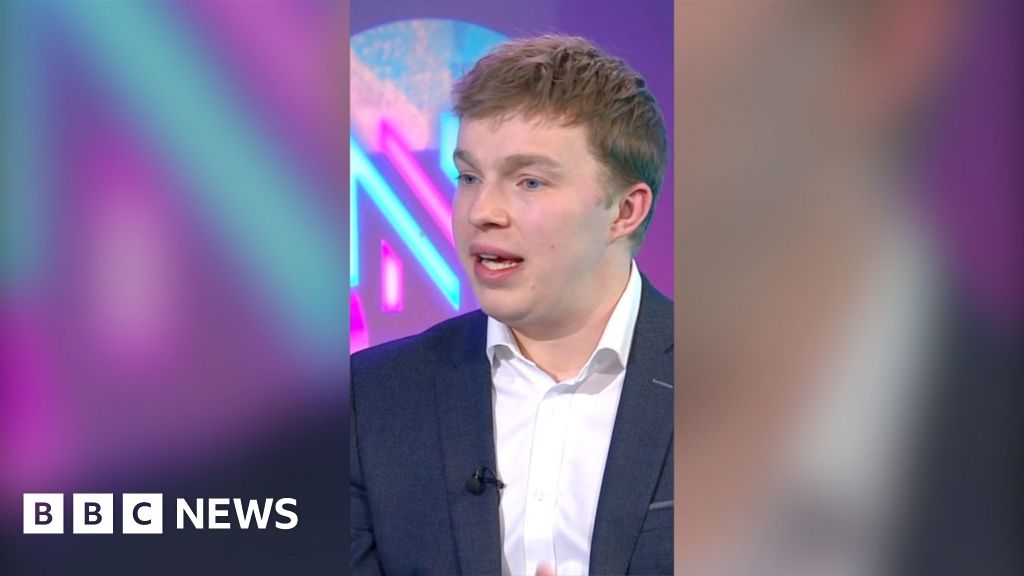
Dr Arthur Joustra, appearing on BBC News explains how he borrowed £55,000 back in 2022 on the Plan Two loan and has since repaid £10,000, yet now owes a shocking £72,000. He describes the debt incursion as ‘creeping up in the background with not really an awful lot you can do about it’ (BBC News, 2026). The shared feeling of anxiety attached to graduates is evidently widespread across the Plan Two generation with many commentors on the interview post agreeing with Arthur’s comments.

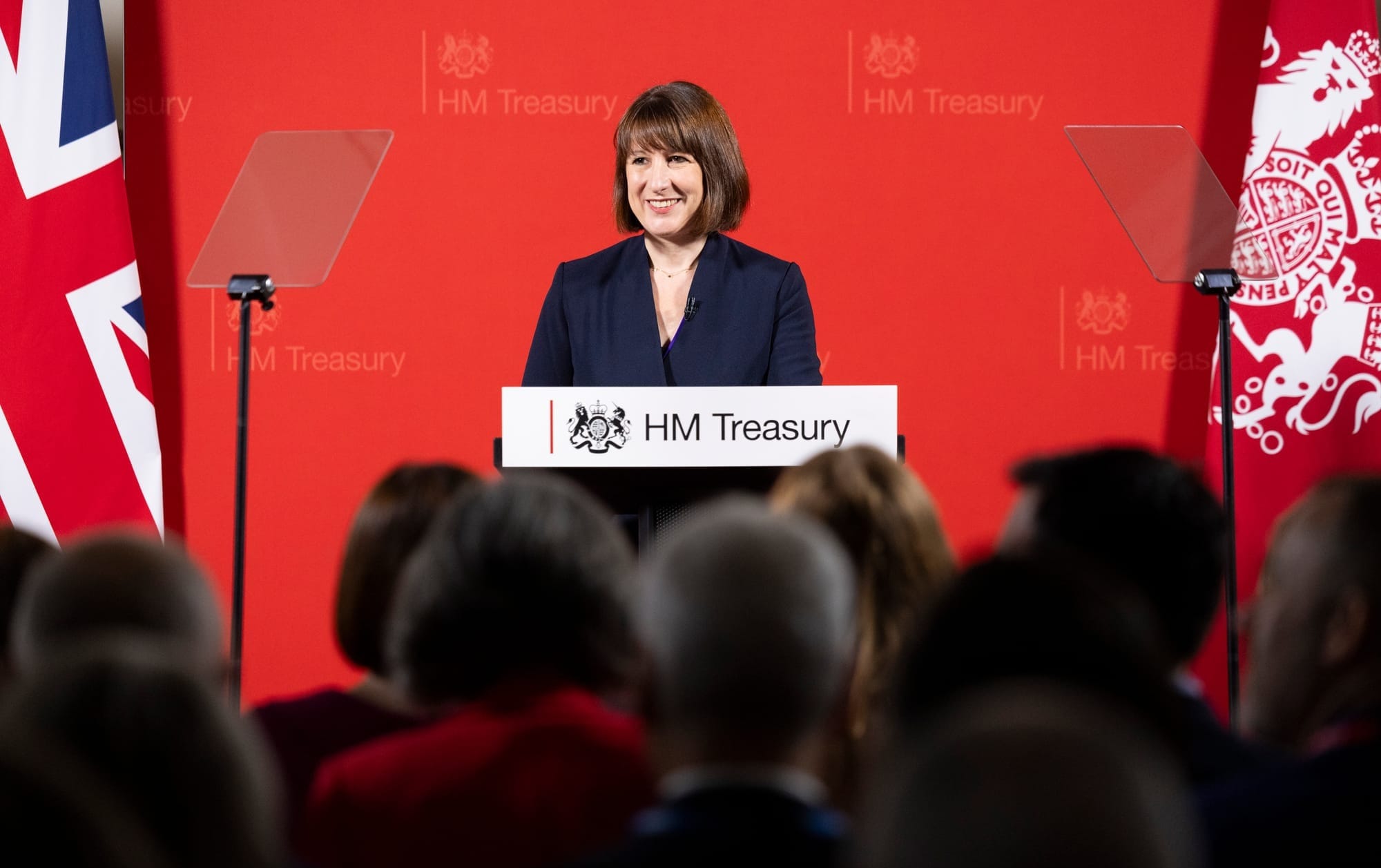
In an interview with ITV, Rachel Reeves acknowledges the broken state of the current student loan system within the backdrop of wider public sector failure that she highlights was inherited by the Labour Government. She pivots the interview around quickly to highlight that 1 in 6 young people are not in employment, education or training that and argues this must be addressed urgently and takes priority. ‘Is (the student loan crisis) at the front of the queue? No, it’s not’ (ITV Politics, 2026). This mainstream media attention demonstrates how the student loan crisis has moved from a national financial policy problem into a highly visible and contentious political issue.
The current Labour Government has yet to deliver a policy that resolves this disparity that disproportionately disadvantages graduates based on generational gaps, instead opting to implement a threshold freeze. This means that the repayment threshold at which graduates begin to repay their loans does not rise with inflation and has been locked in until 2030, effectively acting as a stealth tax increase and extending the repayment duration on an already unbalanced agreement.
When combined with the current economic state, it is clear why the student loan system has generated anger and uncertainty for the futures of many young people. The system has lost both economic credibility and political legitimacy, embodying inequality in British society once again.
Given the attention that the student loan crisis has received, multiple solutions have been proposed in order to realign the system with its original intent. These solutions must satisfy all actors fairly, relieving graduates of the financial strain of an overbearing system while also not placing this strain back on the government completely.
A compromise must emerge in the solution that untangles the paradoxical nature of the present system. Economists, such as the Institute for Fiscal Studies (2026) have criticised the real interest rate and RPI index placed on Plan Two students and have advised a reduction in the interest rates in exchange for a longer repayment period. This would tackle the root cause of the issue and make the system feel fairer and more transparent at the cost of higher long-term costs for government since less interest is collected.
Alternatively, the Sutton Trust (2024) has proposed the reintroduction of maintenance grants to the most disadvantaged to level the financial playing field for carrying these loans into early adult life. This plan has been picked up by the government with Rachel Reeves announcing the roll out of maintenance grants in England by 2027/28 (Standley, 2026). Yet this approach is still flawed due to not having an effect on Plan Two graduates who are hit harder, nor aiding the shrinking middle class in financial security. It is still unclear how this will be implemented and the specific criteria that will surround the maintenance grant.
Finally, a simple implementation would be the changing of the RPI to CPI, putting it in line with other government funded schemes that accrue interest that reflects true inflation rates.
The student loans crisis is unlikely to disappear without government intervention, especially with the rising cost of living and volatile international economic environment. The proposed interventions highlighted, such as linking inflation rates to CPI would put the government on the right track to restore fairness and transparency.
Yet the broader structural inequalities must be addressed across generations on different student loan plans to alleviate tensions and anxiety for graduates. Additionally, the impact of Plan Five graduates entering the workforce with lower repayment thresholds and extended 40-year repayment plans risks normalising student debt as a permanent feature of working life rather than a temporary financial obligation. Ultimately, the direction of this debate is largely in the hands of policymakers who now seem preoccupied with wider youth unemployment and rising international tensions.
Bibliography:
bbcnews. (2026) '"It's essentially a 30-year tax just for graduating"' [Instagram]. 30 January. Available at: https://www.instagram.com/reel/DUIQt0UjLEG/ (Accessed: 3 April 2026).
Bolton, P. (2025) Student loan statistics. House of Commons Library. Available at: https://researchbriefings.files.parliament.uk/documents/SN01079/SN01079.pdf (Accessed: 16 March 2026).
Hubble, S. (2010) The Browne Review of Higher Education Funding and Student Finance. House of Commons Library. Available at: https://researchbriefings.files.parliament.uk/documents/SN05739/SN05739.pdf (Accessed: 17 March 2026).
Institute for Fiscal Studies (2026) Options for changing Plan 2 student loans: costs, benefits and distributional effects. Available at: https://ifs.org.uk/sites/default/files/2026-02/IFS%20Report%20-%20Options%20for%20changing%20Plan%202%20student%20loans%20costs%2C%20benefits%20and%20distributional%20effect.pdf (Accessed: 18 March 2026).
ITV Politics (2026) 'Chancellor Rachel Reeves says she wants to fix the student loan system but it is not currently the top priority' [TikTok] 17 March. Available at: https://www.tiktok.com/@itvpolitics/video/7618255434176154902 (Accessed: 3 April 2026).
Matthews, A. (2022) ‘The idea and becoming of a university across time and space: Ivory tower, factory and network’, Postdigital Science and Education. Available at: https://doi.org/10.1007/s42438-022-00341-0 (Accessed: 16 March 2026).
National Committee of Inquiry into Higher Education (1997) Higher education in the learning society (The Dearing Report). Available at: https://education-uk.org/documents/dearing1997/dearing1997.html (Accessed: 16 March 2026).
Office for Budget Responsibility (2011) Working paper no. 2: The long-run difference between RPI and CPI inflation. Available at: https://obr.uk/docs/dlm_uploads/Working-paper-No2-The-long-run-difference-between-RPI-and-CPI-inflation.pdf (Accessed: 17 March 2026).
Office for National Statistics (2026) RPI: Percentage change over 12 months – all services (series DOGE). Available at: https://www.ons.gov.uk/economy/inflationandpriceindices/timeseries/doge/mm23 (Accessed: 17 March 2026).
Royal London (2026) Retail prices index. Available at: https://adviser.royallondon.com/technical-central/rates-and-factors/retail-prices-index/ (Accessed: 16 March 2026).
Standley, N. (2026) Student loans: Maintenance grants to return for some students. BBC News. Available at: https://www.bbc.co.uk/news/articles/c749vnylk1jo (Accessed: 16 March 2026).
The Sutton Trust (2024) Reforming student maintenance. Available at: https://www.suttontrust.com/wp-content/uploads/2024/03/Reforming-student-maintenance.pdf (Accessed: 18 March 2026).
UK Parliament (2026) Student loans: new inquiry on repayment terms and the taxation of graduates launches. Available at: https://committees.parliament.uk/committee/158/treasury-committee/news/212575/student-loans-new-inquiry-on-repayment-terms-and-the-taxation-of-graduates-launches/ (Accessed: 16 March 2026).