How capitalist shock therapy made modern Russia
When Yeltsin handed over the reins to his little-known prime-minister Vladimir Putin just before the millennium, many had no idea the lengths the newly sworn in President would go to assert his power.
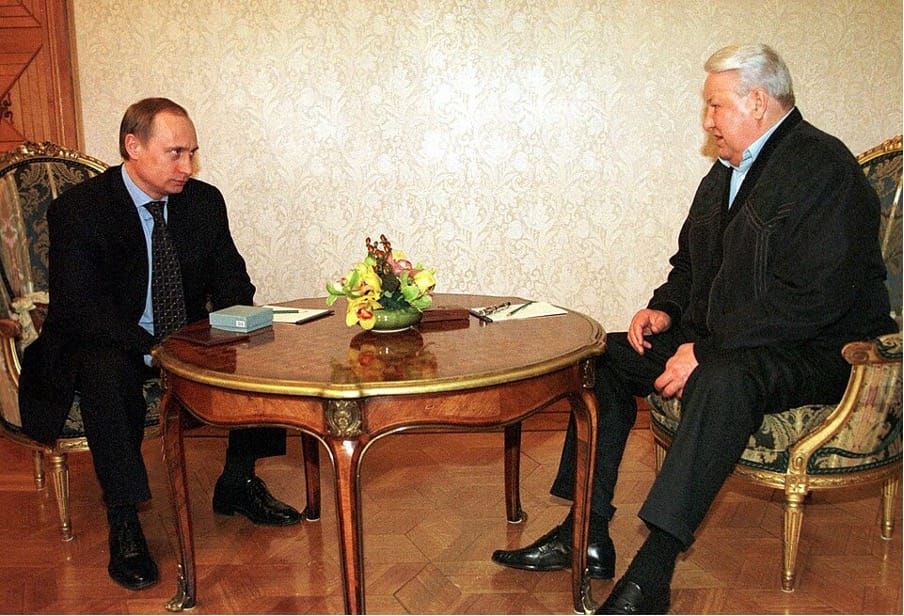
Although termed a ‘managed democracy’ when Putin first took control, the description of dictatorship, or full-blown autocracy is more fitting these days (Stoner, 2023, p. 6).
As the iron-grip of the Soviet Union began to falter in the late 1980s, the reformer Mikhail Gorbachev was elected to office as General Secretary of the Communist Party of the Soviet Union by the politburo. The first soviet leader born after the 1917 Russian Revolution, Gorbachev was at the helm of a new wave of Soviet leaders, focused on democratic reform not repression, namely through his policies of glasnost (openness) and perestroika (restructuring). The West, however, wanted more from ‘Gorby’. The G7 had previously threatened ‘to sever the rope and let him fall’ if he did not ‘embrace radical shock therapy immediately’ (Klein, 2007, p. 123), a school of economic thought directly opposed to the current direction of Gorbachev’s reforms that would have had to have been ‘violently interrupted and radically reversed’ (Klein, 2007, p. 124).
The neoliberal shock therapists however found their man in Boris Yeltsin.
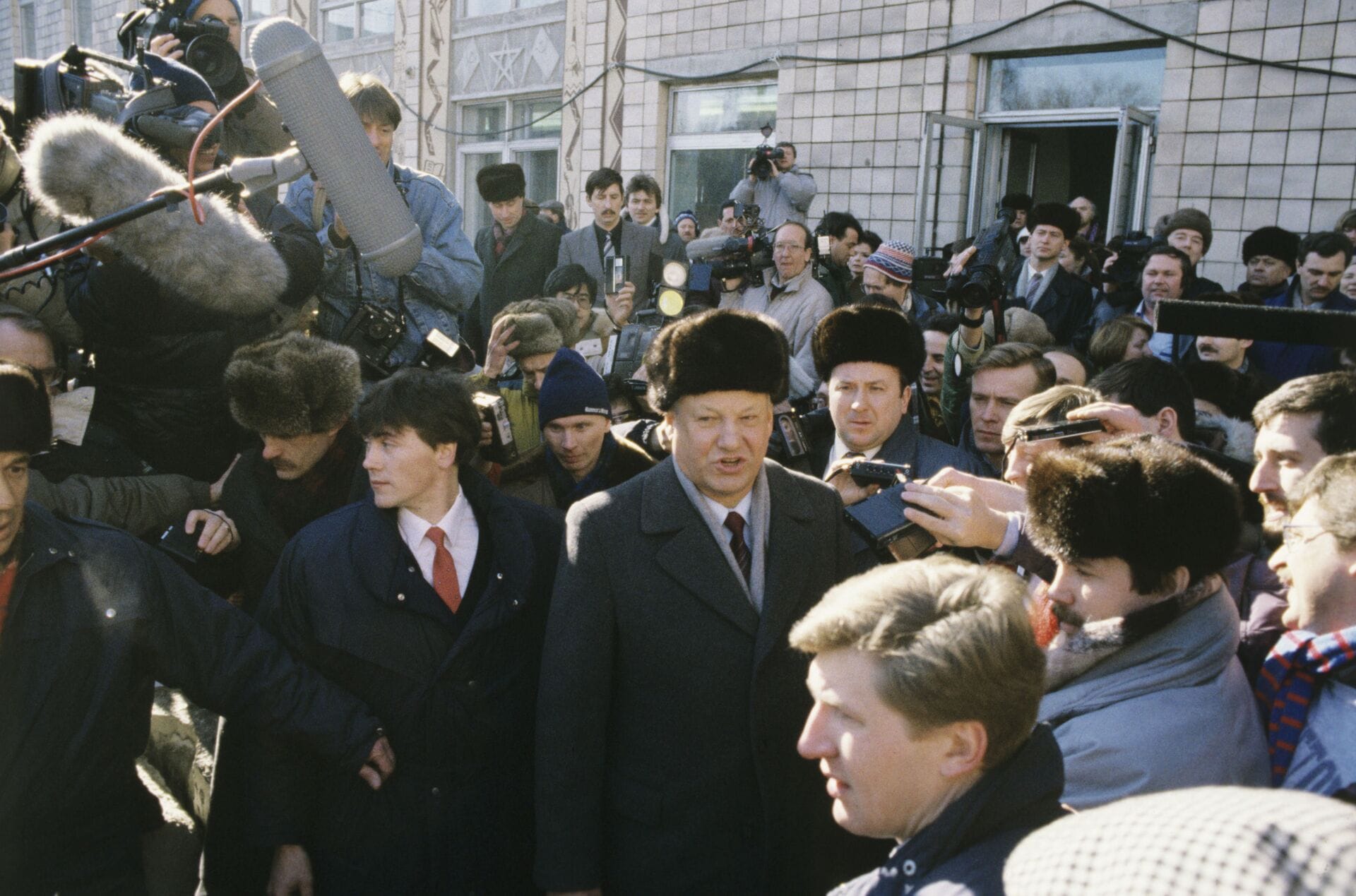
Boris Yeltsin was the President of the Russian Soviet Federative Socialist Republic, and once a vocal supporter of Gorbachev, soon became one of his strongest challengers. After a failed coup against Gorbachev in August 1991, Yeltsin emerged as a defender of democracy, immortalised in history on top of a tank in front of Russia’s parliamentary building, the White House, as he attempted to convince the military to lay down their arms.
As Yeltsin sought to capitalise on his newfound popularity within Russia, he moved to dissolve the Soviet Union. As the Russian Journalist Sergei Parkhomenko said when interviewed by David Remnick for his book Resurrection, ‘while you couldn’t take Gorbachev out of the country, you could take the country away from Gorbachev’ (Remnick, 1998, p. 17).
The West's insistence on shock therapy over gradual reform ensured that when Yeltsin came to power, the economic transformation of Russia would be rapid, brutal and largely unaccountable - creating the conditions for state capture.
The economic school of thought Yeltsin had bought into had been pushed by the United States and the International Monetary Fund (IMF) since its advent, and is now colloquially known as ‘shock therapy’ or the Washington Consensus. With its roots in the teachings of Milton Friedman in the mid-1950s, it slowly became doctrine in various universities around the world, particularly in the United States. From there its disciples had trickled into positions within the US government, the IMF and the World Bank.
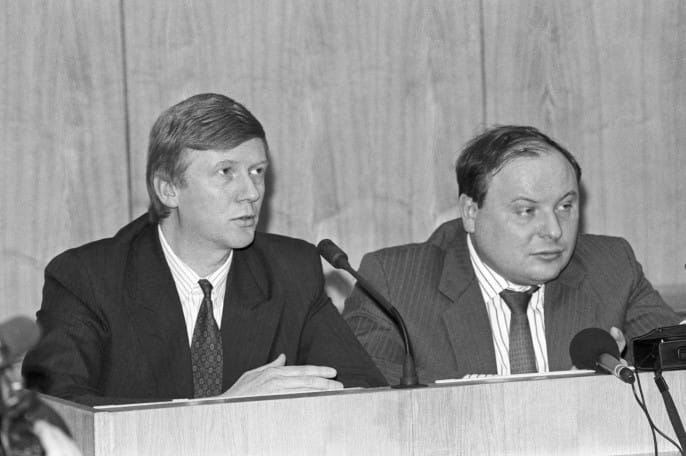
Shock therapy fundamentally requires adherence to the economic measures introduced, no matter their material impact. For this reason, the Yeltsin administration approached the Congress of People’s Deputies, the parliament, with a proposition: if he was granted the power to rule by decree for a year, he would fix the Russian economy (Klein, 2007, p. 125). Over the next 3 years Yeltsin would crush any opposition to his reforms, even using the armed forces to assault the rebellious White House in 1993 (Steele and Hearst, 1993). As Yeltsin centralised his control, his team of economic advisors began implementing the ‘holy trinity’ as termed by Rutland, more commonly known as the Washington Consensus: stabilisation, liberalisation and privatisation (Rutland, 1999, p. 190).
Privatisation however was the most damaging of the reforms, with its purpose being described as the ‘legitimization of the seizure of state assets’ (Rutland, 1999, p. 192). However, the policy most relevant is the privatisation through cash sales and loans; Anatoly Chubais, the privatization ‘tsar’, came up with this idea, enabling Russian banks to ‘swap shares in leading oil and metal companies in return for loans (Rutland, 1999, p. 194).
The privatisation scheme is where we begin to see the rise in power of the select few, with the right connections, who managed to seize control of Russia’s formerly state-owned industrial backbone. It was this theft of state assets, enabled and legitimised by Western-backed reform, that created the oligarchic class whose need for political protection would ultimately bring Putin to power
Most of the capital used to start these firms was rumoured to have come from ex-KGB affiliated funds appropriated from Moscow to be used for covert operations, and stored offshore under the control of KGB bureaucrats (Dawisha, 2014, p. 19). In the words of Anton Surikov, a former Russian intelligence official, ‘the creation of the oligarchs was a revolution engineered by the KGB, but then they lost control’ (Dawisha, 2014, p. 19).
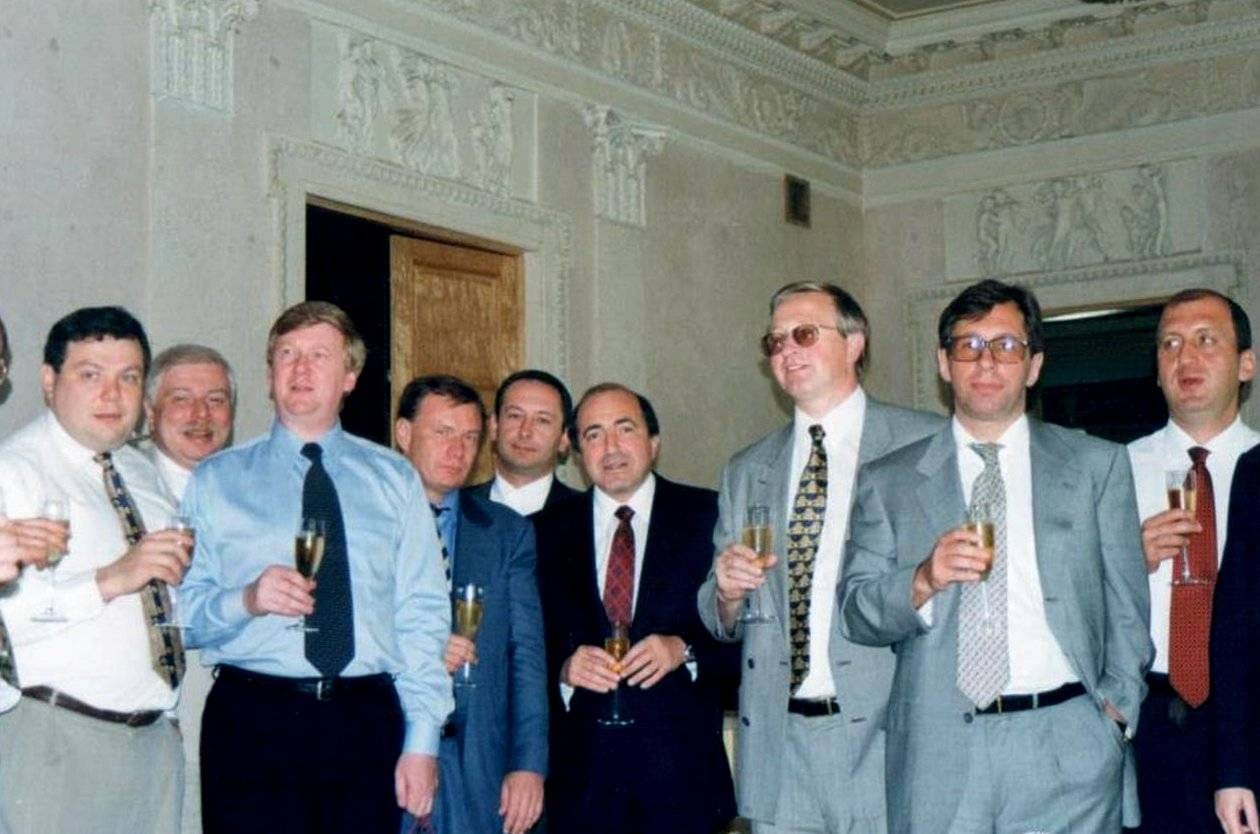
Putin’s career began to blossom in this new economic age as he began climbing the local political ranks in St Petersburg, using ‘KGB methods in a mafia world’ (Dawisha, 2014, p. 69). The inner circle around Putin has also been a constant over the years, made up of former associates of his from the early 1990s (Dawisha, 2014, p. 19), with Surikov when interviewed saying, ‘all Russian politicians are bandits from St. Petersburg’.
Putin used his links with criminal enterprise and the intelligence services to build a state where his power came not from his title or any form of ‘institutional legitimacy’, but from a ‘tribute system’ whereby all were forced to recognise his authority (Dawisha, 2014, p. 18). Putin used the combination ‘laws, the media, and security forces’ to maintain this order and balance the intersecting players (Dawisha, 2014, p. 18).
In an interview with Die Welt in 2007, Stansilav Belkovskiy, the founding director of the National Strategy Institute, theorised that the oligarchs continually supported Yeltsin post-privatisation to guarantee the results of privatisation (Dawisha, 2014, p. 83). However, when it became obvious that Yeltsin’s position was at risk in 1999, these same oligarchs realised they had to find a successor, which is when according to George Soros the ‘plan to promote Putin’s candidacy was hatched’ (Dawisha, 2014, p. 90). Shock therapy had not liberalised Russia - it had simply transferred power from Soviet-era bureaucrats to a new class of politically connected businessmen, who would prove just as resistant to democratic accountability.
Since Putin rose to power, Russia has tacked in a very different direction to what many originally hoped. The Russia Putin built did not emerge despite shock therapy - it emerged because of it. The privatisation schemes designed in Washington and implemented by Chubais created the oligarchic class that then needed a strongman to protect their gains, and found one in Putin. Russia is now firmly under his grasp, with any notion of dissent crushed quickly and forcefully - illustrated most by the unravelling of Yevgeny Prigozhin's attempted coup in 2023, and his subsequent death the following year (Sauer, 2025). The West, having helped engineer the conditions for Putin's rise, now finds itself confronting a system it had a significant hand in creating.
Glossary of Terms
Semibankirshchina – a group of 7 bankers who purportedly controlled 50% of the Russian economy, most mass media and bankrolled Yeltsin’s re-election campaign in 1996 as coined by Andrei Fadin
Bibliography
Dawisha, K. (2014) Putin’s Kleptocracy. Simon and Schuster.
Klein, N. (2007) The Shock Doctrine. Penguin Books.
Remnick, D. (1998) Resurrection. Vintage Books.
Rutland, P. (1999) ‘Mission Impossible? The IMF and the Failure of the Market Transition in Russia’, Review of International Studies, 25, pp. 183-200. Available at: http://www.jstor.org/stable/20097645 (Accessed: 2 March 2026).
Sauer, P. (2022) ‘Mikhail Gorbachev: a divisive figure loved abroad but loathed at home’, The Guardian, 31 August. Available at: https://www.theguardian.com/world/2022/aug/31/mikhail-gorbachev-a-divisive-figure-loved-abroad-but-loathed-at-home (Accessed: 2 March 2026).
Sauer, P. (2025) ‘Prigozhin knew he was ‘doomed’ after failed rebellion, says mother’, The Guardian, 22 August. Available at: https://www.theguardian.com/world/2025/aug/22/prigozhin-knew-he-was-doomed-after-failed-rebellion-says-mother (Accessed: 9 March 2026).
Steele, J. and Hearst, D. (1993) ‘Yeltsin crushes revolt’, The Guardian, 5 October. Available at: https://www.theguardian.com/world/1993/oct/05/russia.davidhearst (Accessed 16 March 2026).
Stoner, K. (2023) ‘The Putin Myth’, Journal of Democracy, 34(2), pp. 5-18. Available at: https://dx.doi.org/10.1353/jod.2023.0020